
Call for Confidential Support
Most Major Insurance Accepted – Verify Your Coverage Online Today.
Call for Confidential Support
Call for Confidential Support
Most Major Insurance Accepted – Verify Your Coverage Online Today.
Call for Confidential Support
Our outpatient mental health programs provide structured, evidence-based care for depression, anxiety, PTSD, bipolar disorder and other conditions — with or without a substance use diagnosis. Step down from inpatient care or start here, with the level of support that fits your life.
MENTAL HEALTH LEVELS OF CARE
Our two Lancaster locations — the Outpatient Center and the Outpatient Residence — work together to offer flexible levels of mental health care. You can step up or down between programs as your needs change.
Our most structured level of outpatient mental health care. You attend full-day programming five days a week at the Outpatient Center, including individual therapy, psychiatric care and skills-based groups. Most clients complete PHP in about 8–12 weeks.
Explore PHPThree-hour group sessions three days a week while you live at home, so you can keep up with work, school and family. IOP works as a first step for many people or as a step down from PHP, typically lasting about 5–6 weeks.
Explore IOPOur psychiatric provider completes an evaluation, reviews your current medications and adjusts your plan as symptoms change, working closely with your therapist so medication and therapy support each other.
Progress continues after your program ends. Aftercare planning begins during treatment and may include referrals to outpatient therapists and psychiatric providers, a relapse prevention plan, alumni meetings and peer support through groups such as NAMI.
CONDITIONS WE TREAT
Our mental health programs support adults whose symptoms are making it hard to keep up with work, school, relationships or daily life. Treatment is tailored to your diagnosis, history and goals. We commonly treat:

THERAPIES
Feeling better involves more than managing symptoms. It means understanding what you are experiencing, building practical coping skills and strengthening the relationships that support you. Our Outpatient Center offers:
CBT helps you identify the thought patterns that fuel depression and anxiety, test them against the evidence and practice healthier ways of responding to stress, worry and low mood.
DBT teaches skills for tolerating distress, regulating intense emotions, staying present and communicating your needs — especially helpful for mood swings, impulsive behavior and relationship conflict.
CPT is a structured, trauma-focused therapy that helps people living with PTSD examine and change the beliefs that keep them stuck after a traumatic experience, such as guilt, self-blame or a constant sense of danger.
Group sessions connect you with peers facing similar challenges. Sharing experiences and practicing skills together reduces isolation and builds confidence you can carry into daily life.
Mental health conditions affect the whole family. Family sessions help loved ones understand what you are going through, improve communication and learn how to support your progress at home.

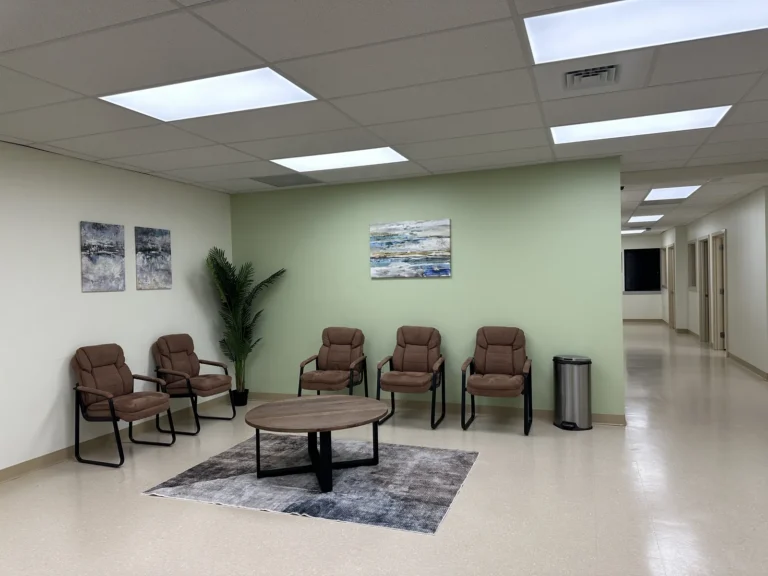
Outpatient care may be a good fit if you need more support than weekly therapy but do not need 24-hour hospital care. Our programs may be right for you if:
Starting mental health treatment often begins with practical questions. The answers below provide general information; a confidential clinical assessment will help determine the right next step for you.
Our admissions team is available to answer questions about mental health treatment, insurance and next steps.
Call (223) 365-8407 Verify Your Insurance All calls are free and confidentialOur admissions team is available to answer questions now.